When buying a home in South Carolina, many people are surprised to learn that the property tax rate isn’t one-size-fits-all. In fact, how much you pay each year largely depends on whether the property is your primary residence or a second home/investment property. Understanding this difference can save you thousands of dollars and help you plan ahead as a homeowner.
Two Main Property Tax Rates
South Carolina offers two primary property tax classifications:
4% Assessment Ratio (Primary Residence)
6% Assessment Ratio (Second Homes, Rentals, or Investment Properties)
Here’s how it works:
1. Primary Residence (4% Rate)
If you live in the home as your legal primary residence and have filed for the Owner-Occupied Residential Property Tax Exemption, your property is taxed at a 4% assessment ratio. This significantly lowers your annual tax bill.
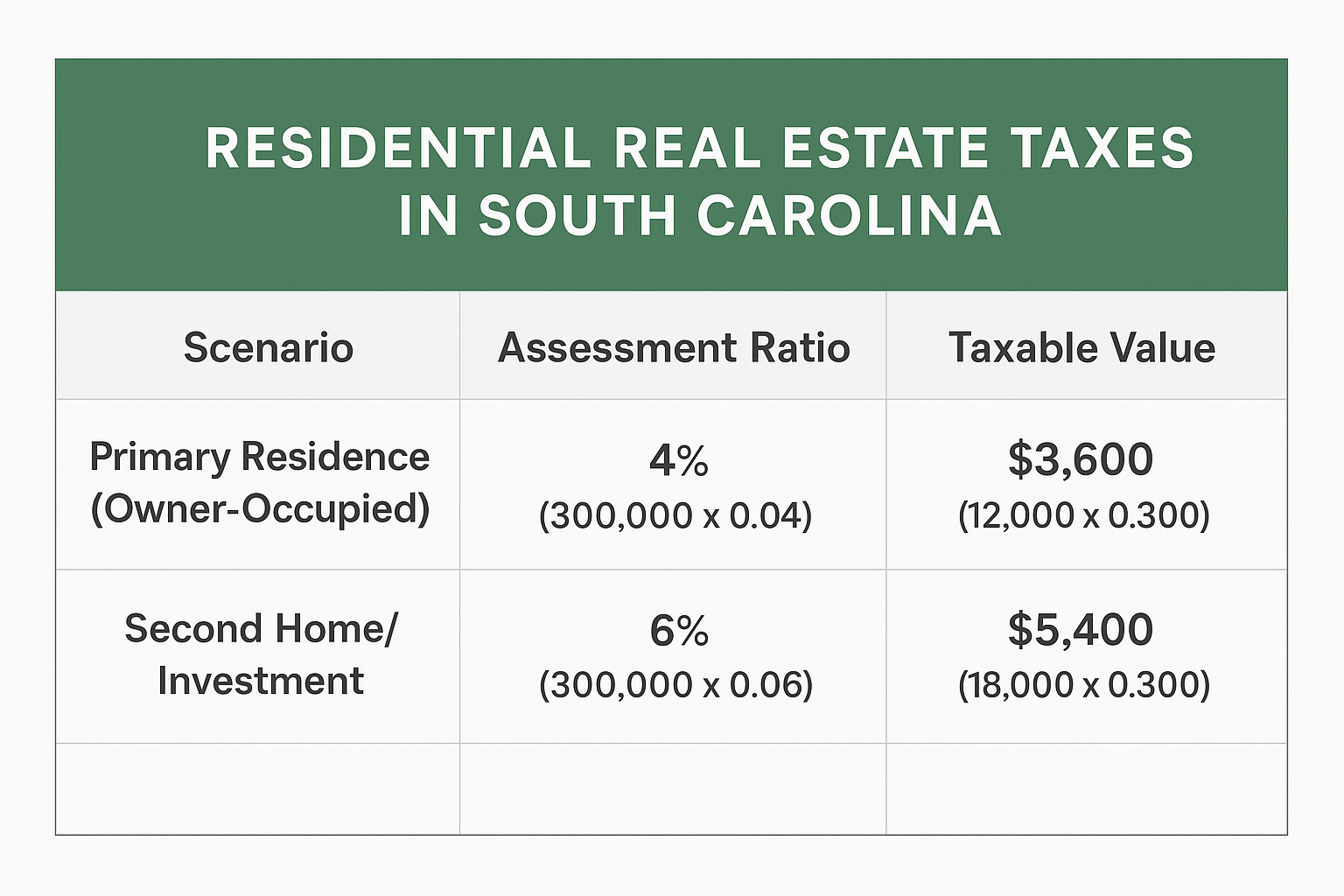
For example, if your home is assessed at $300,000, the taxable value at the 4% rate would be $12,000 (300,000 × 0.04). Property tax rates in your county are then applied to that figure.
Other benefits:
You may also be exempt from certain school operating taxes.
The 4% rate applies only if you file the proper paperwork with your county’s assessor’s office.
2. Second Home, Rental, or Investment Property (6% Rate)
If the home is not your primary residence—such as a vacation home, rental property, or investment property—it’s taxed at a 6% assessment ratio.
Using the same $300,000 home as an example, the taxable value at the 6% rate would be $18,000 (300,000 × 0.06). That higher taxable value means a larger tax bill every year.
 Important notes:
You do not automatically get the 4% rate just because you own the property. You must apply for it.
If you rent out your home (even short-term), it may disqualify you from the 4% rate.
Filing for the Lower Rate
To take advantage of the lower 4% rate, you must:
File an application with your county’s assessor office.
Provide proof of residency (driver’s license, voter registration, vehicle registration, etc.).
Apply by the deadline, which is usually in the year you first occupy the home as your primary residence.
If you don’t file, your property will automatically be taxed at the higher 6% rate.
Why This Matters
The difference between 4% and 6% can add up to thousands of dollars over the years. For many homeowners, making sure they’re properly classified can free up money for renovations, investments, or simply reduce monthly escrow payments.
Final Thoughts
South Carolina’s property tax structure is very homeowner-friendly—if you know the rules. Whether you’re buying your first home, a vacation property, or an investment property, understanding the difference between the 4% and 6% assessment ratios can help you budget wisely and avoid costly surprises.